
Projects
1. Genome Humanization Using Genome Editing Technologies
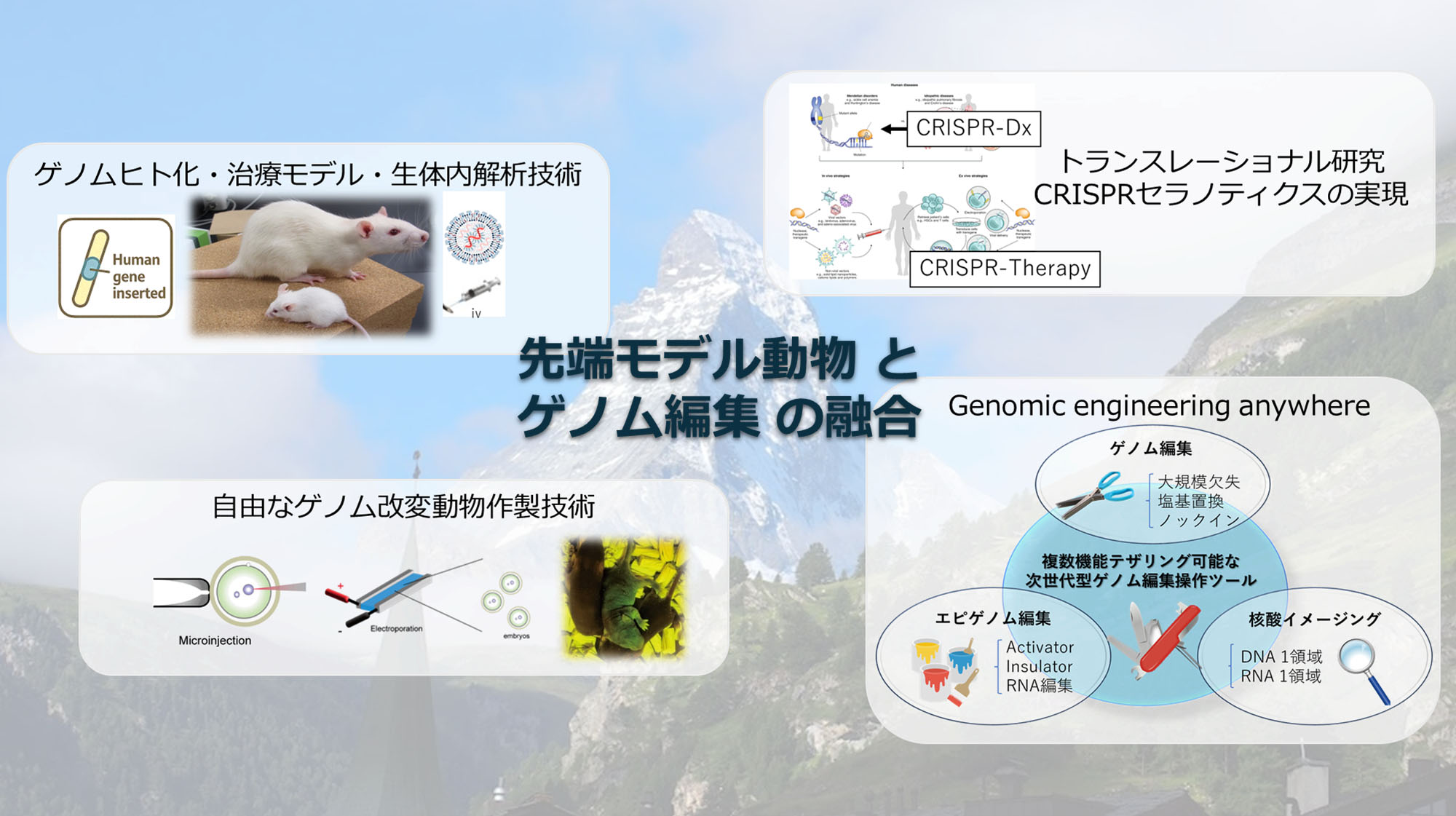
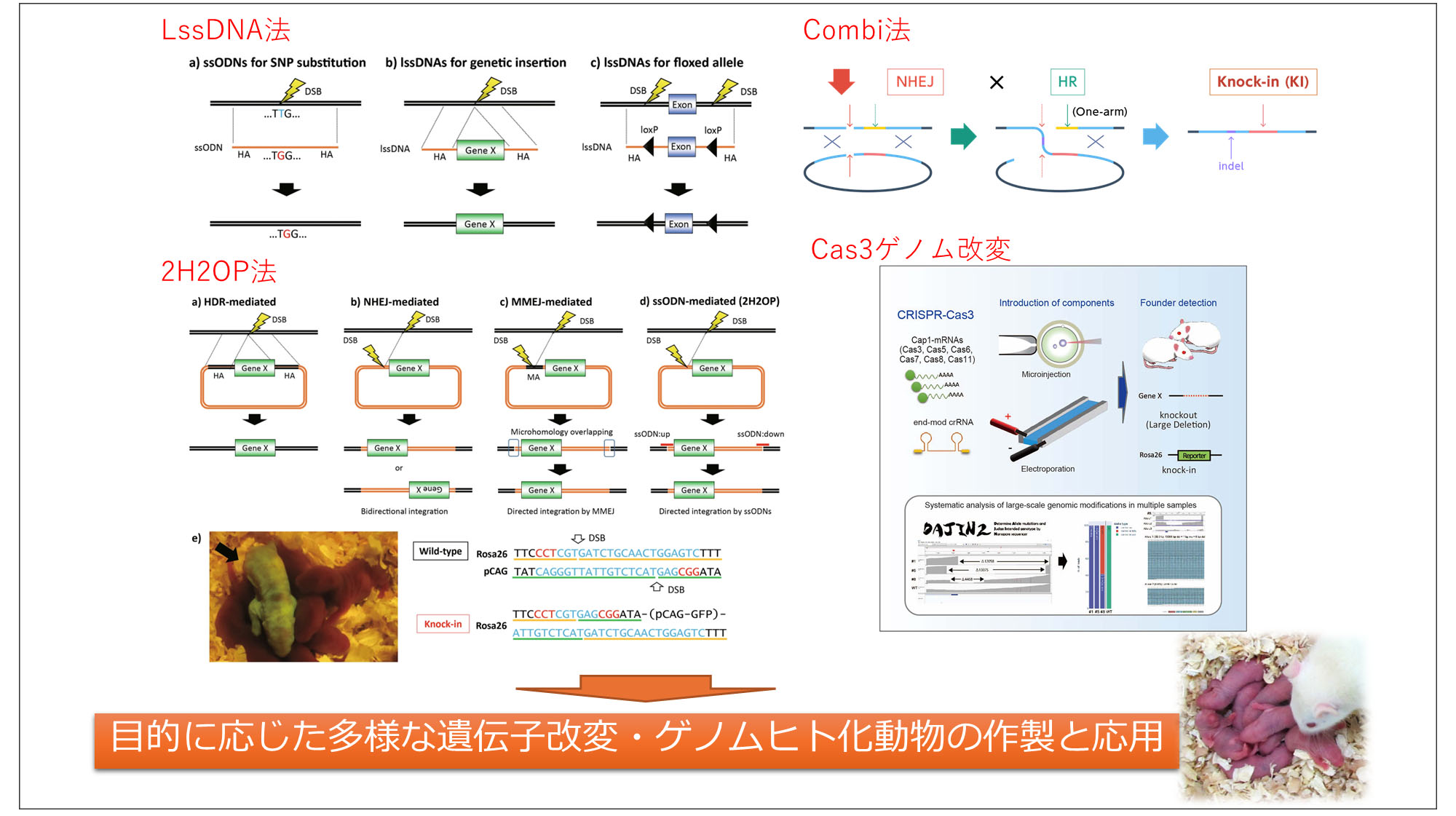
To understand the mechanisms underlying human disease development and to facilitate the discovery of novel therapeutic strategies, it is essential to establish models that enable functional analysis of human genes in vivo. We are advancing genome humanization research using genome editing technologies. We have developed genome humanization approaches, including the “2H2OP method” and the “Combi method”, which enable efficient integration of human genomic regions.
Moving forward, we aim to establish next-generation genome humanization technologies that enable large-scale replacement of human genomic regions. In addition, we are developing humanized models incorporating gut microbiota-mimicking environments with humanized intestinal immune-related genes, as well as humanized animal models for evaluating nucleic acid therapeutics and genome editing-based therapies. Through these efforts, we aim to create experimental animal models that serve as a foundation for next-generation medical research.
Representative publications
・Yoshimi K, et al. Combi-CRISPR: combination of NHEJ and HDR provides efficient and precise plasmid-based knock-ins in mice and rats. Hum Genet. 2021 Feb;140(2):277-287.
・Yoshimi K, et al. ssODN-mediated knock-in with CRISPR-Cas for large genomic regions in zygotes. Nat Commun. 2016 Jan 20;7:10431.
2. Development of Next-Generation Genome Engineering Technologies
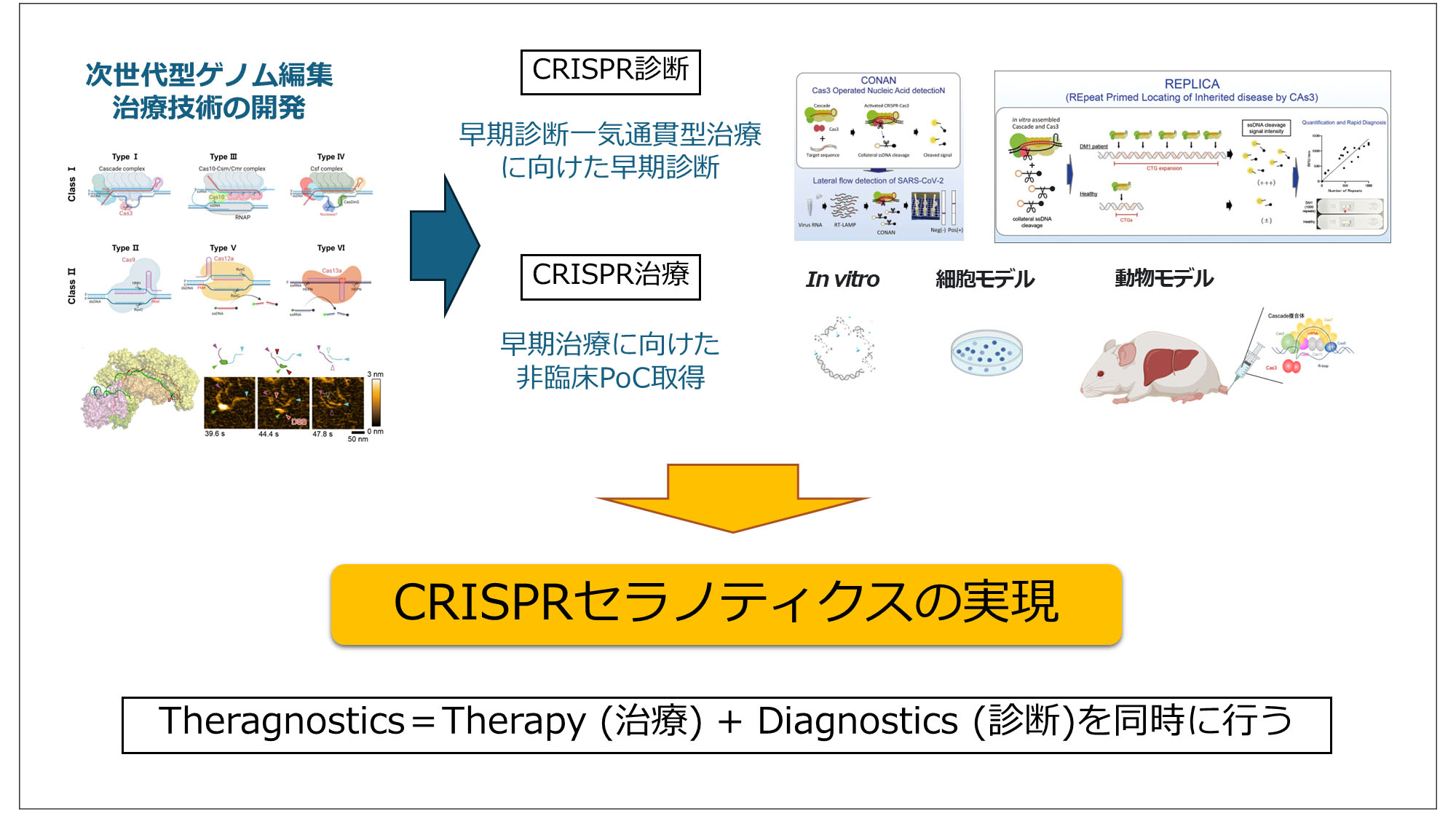
Genome editing technologies are becoming fundamental tools in life science research, with rapidly expanding applications in the medical and industrial fields. Our laboratory has been developing novel genome editing technologies based on CRISPR-Cas3, advancing research from basic science to medical and industrial applications.
In the future, we aim to develop multi-genome engineering tools that enable simultaneous genome editing, epigenome editing, and genome imaging. Furthermore, we seek to establish innovative genome engineering platforms based on CRISPR technologies that integrate diagnosis and therapy into a unified approach.
Through these studies, we aim not only to deepen our understanding of biological phenomena but also to create next-generation genome engineering technologies that contribute to future medical advances.
Representative publications
・Yoshimi K, et al. Genome editing using type I-E CRISPR-Cas3 in mice and rat zygotes. Cell Rep Methods. 2024 Aug 19;4(8):100833.
・Yoshimi K, et al. Dynamic mechanisms of CRISPR interference by Escherichia coli CRISPR-Cas3. Nat Commun. 2022 Aug 30;13(1):4917.
・Morisaka H et al. CRISPR-Cas3 induces broad and unidirectional genome editing in human cells. Nat Commun. 2019 Dec 6;10(1):5302.
3. Host–Microbe and Virus Interactions
Interactions between hosts and microbes or viruses represent a critical research field for understanding infectious diseases and immune responses. Our laboratory investigates the molecular mechanisms underlying host–microbe and host–virus interactions by utilizing genome editing technologies and humanized animal models.
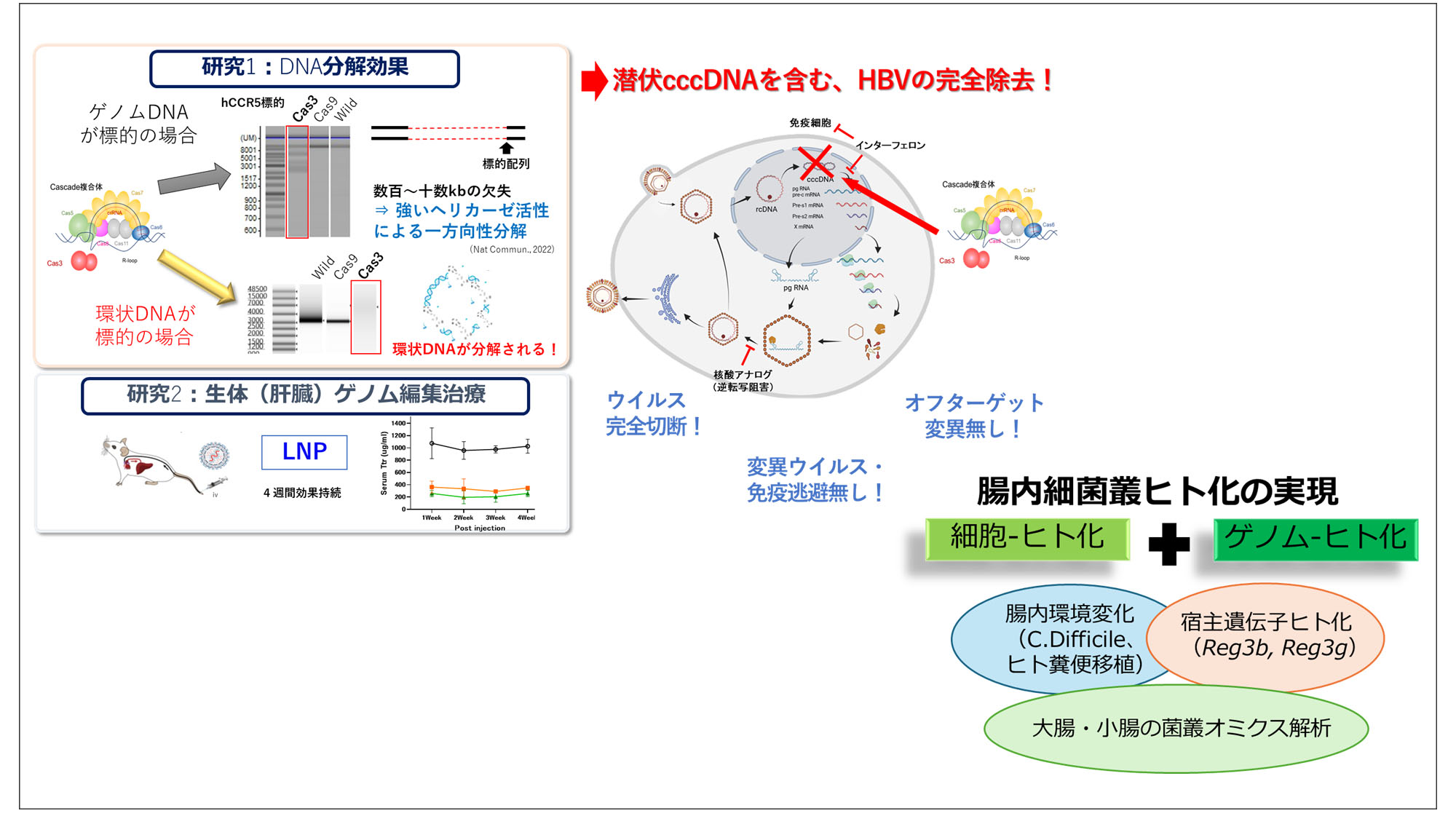
In particular, we are interested in developing strategies for the elimination of DNA viruses, such as hepatitis B virus (HBV), that persist within the host genome. We also aim to establish gut microbiota-mimicking models using animal models with humanized intestinal immune-related genes to analyze changes in the human gut microbiota and host responses.
Furthermore, we are developing simple diagnostic methods for infectious diseases using CRISPR technologies and aim to establish a novel research platform that integrates infectious disease diagnosis and therapy. In addition, through the exploration of gene functions in microbes and viruses, we expect to discover new genome editing tools in the future.
Representative publications
・Hirano, R, et al. Sustainable and portable CRISPR-based diagnostics for high-sensitivity Mpox detection. npj Biosensing 2, 43 (2025).
・Yoshimi K, et al. CRISPR-Cas3-based diagnostics for SARS-CoV-2 and influenza virus. iScience. 2022 Feb 18;25(2):103830.
・Hirano R, et al. Next-generation prebiotic promotes selective growth of bifidobacteria, suppressing Clostridioides difficile. Gut Microbes. 2021 Jan-Dec;13(1):1973835.
4. Expansion and Utilization of Experimental Rat Resources
Rats are indispensable experimental animals in a wide range of life science research fields, including physiology, neuroscience, and pharmacology. Our laboratory is committed to developing genetically modified rat models using genome editing technologies while expanding rat bioresources that are widely accessible to the research community. As the core institution of the National BioResource Project for the Rat (NBRP-Rat), Kyoto University supports researchers in Japan and abroad through the maintenance and distribution of genetically modified rat strains. Furthermore, we actively promote international collaborations with major rat resource organizations, including the Rat Genome Database (RGD) and the Rat Resource & Research Center (RRRC) in the United States, as well as rat resource institutes in Korea, thereby contributing to the sharing of rat resources and the advancement of the global research infrastructure. In addition, we are developing new rat research databases and applying artificial intelligence (AI) to gene function analysis and resource management, with the goal of establishing next-generation research infrastructure for rat-based biomedical research.